
Imagine waking up in the middle of the Indonesian archipelago, surrounded by turquoise waters, untouched tropical islands, and spectacular landscapes stretching across the horizon. As the morning sun rises, you step onto the deck of a traditional wooden phinisi boat, prepare your snorkeling equipment, and get ready for another extraordinary day of exploration. This is what makes the 4-Day 3-Night Komodo Tour package from Lombok one of the most rewarding sailing adventures in Indonesia. More than an ordinary island-hopping holiday, this four-day, three-night journey connects Lombok, Sumbawa, and Flores through an unforgettable combination of marine wildlife encounters, remote islands, tropical beaches, and the legendary Komodo National Park.
If you are planning an Indonesian adventure and wondering whether a Lombok to Komodo boat trip is worth your time, the answer lies in the incredible diversity of experiences along the route. Unlike a short Komodo day trip departing from Labuan Bajo, the extended sailing journey gives you the opportunity to discover additional destinations across the Flores Sea, including Kenawa Island, Saleh Bay, and selected marine destinations around Sumbawa. Depending on the vessel and sailing conditions, the adventure may also include Moyo Island, Satonda Island, and other beautiful coastal locations.
One of the most remarkable highlights is the opportunity to encounter whale sharks in Saleh Bay, Sumbawa, before continuing toward the world-famous islands of Komodo National Park. Imagine swimming in the same waters as these gentle giants, watching manta rays glide beneath the surface, trekking across the spectacular hills of Padar Island, and observing prehistoric Komodo dragons in their natural habitat.
For international travelers, couples, backpackers, photographers, and adventure seekers, the 4D3N Komodo tour from Lombok offers an exceptional way to experience several Indonesian destinations in one continuous sailing adventure. Komodo Tour Indonesia provides a selection of boat categories, ranging from economical standard vessels to superior, deluxe, and luxury phinisi boats, allowing travelers to select an experience that matches their comfort preferences and travel budget.
But what makes this particular journey different from other Komodo tours? Why should you choose a four-day sailing expedition instead of flying directly to Labuan Bajo? In this complete guide, we explain the route, itinerary, destinations, boat categories, estimated prices, preparation techniques, safety considerations, and practical booking advice to help you plan your journey with confidence.
The main reason to choose a 4D3N Komodo tour package from Lombok is the opportunity to experience a much larger section of Indonesia’s eastern island landscape in a single journey. Rather than traveling directly to Flores by airplane and booking a separate short cruise, you can sail across the waters between Lombok, Sumbawa, and Labuan Bajo while exploring different destinations along the way.
This route combines several types of adventure that are difficult to experience together on a conventional holiday. You can enjoy island trekking, marine wildlife encounters, snorkeling, tropical beach exploration, sunset photography, and cultural experiences while living aboard a traditional Indonesian sailing vessel.
There are several important advantages to choosing this route:
Another important advantage is the experience of traveling slowly. Instead of rushing between airports, hotels, and individual tour operators, you can enjoy the journey itself. The boat becomes your accommodation, transportation, dining area, and meeting point throughout the expedition.
For travelers who appreciate nature, adventure, and meaningful experiences, the journey between Lombok and Komodo is more than a transportation route. It is an opportunity to discover the extraordinary geographical diversity of Indonesia.
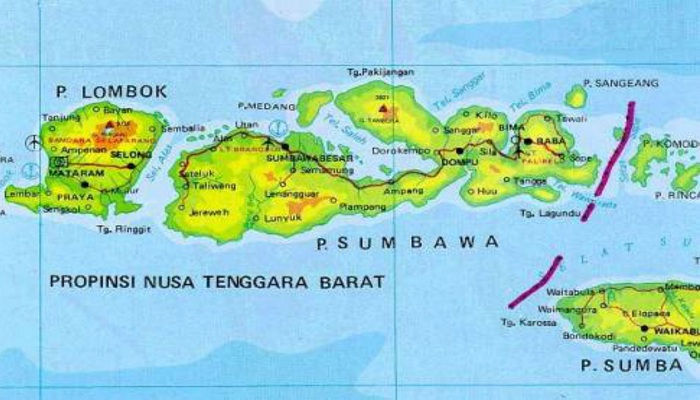
The sailing route generally connects three major geographical areas:
The exact departure harbor and sightseeing stops depend on the vessel, weather, tide conditions, and the operator’s approved sailing plan. Before booking, request a written itinerary showing the departure harbor, arrival harbor, and destinations included in your package.
One of the biggest attractions of the Lombok to Komodo 4D3N boat trip is the opportunity to encounter whale sharks in Saleh Bay, Sumbawa. This experience is particularly attractive to international travelers who want to combine a Komodo sailing holiday with an unforgettable marine wildlife adventure.
Whale sharks are the world’s largest fish. Despite their enormous size, they are filter feeders that consume plankton and other small organisms. Their gentle behavior and impressive appearance make observing them in the ocean an extraordinary wildlife experience.
Saleh Bay offers a distinctive setting for this activity. The protected bay is known for whale shark encounters, particularly around traditional fishing platforms called bagan. Local fishing activity and the availability of food can influence whale shark sightings, making the encounter dependent on natural conditions.
Saleh Bay is located on the northern side of Sumbawa Island. Its extensive coastal landscape and marine environment create an interesting destination for wildlife enthusiasts, photographers, and adventure travelers.
During a typical early-morning visit, the crew prepares the boat before guests enter the water. Travelers receive instructions about snorkeling equipment, swimming conditions, and responsible wildlife observation.
When whale sharks are present, you may have the opportunity to observe their enormous bodies moving slowly through the water. Their spotted patterns, broad mouths, and graceful swimming movements create an experience that is difficult to compare with ordinary snorkeling.
To make your encounter safer and more enjoyable, follow these practical recommendations:
It is important to understand that whale shark sightings are not guaranteed. These are wild animals, not attractions that can be scheduled on demand. Their presence depends on natural conditions, feeding patterns, and marine activity.
Responsible operators should prioritize animal welfare over guaranteeing close encounters. Before booking, ask how the crew manages wildlife interactions and whether the activity follows local conservation guidance.
For travelers using smartphones or underwater cameras, a little preparation can significantly improve the quality of their photographs.
The best photograph is not necessarily the closest one. A beautiful image showing a whale shark swimming naturally through its environment can communicate the magic of the experience without disturbing the animal.
Before reaching the famous islands of Komodo National Park, the Lombok to Komodo sailing journey introduces travelers to some of the most beautiful coastal landscapes in West Nusa Tenggara.
One of the most recognizable destinations is Kenawa Island, a small tropical island known for its white-sand shoreline, green savanna, and panoramic ocean views.
Kenawa Island is famous for its peaceful atmosphere and gently sloping hills. Unlike heavily developed tourist destinations, its landscape offers a more natural experience, with open grassland, coastal vegetation, and beautiful surrounding waters.
Visitors can walk along the beach, enjoy the ocean scenery, and follow a short hiking trail toward the island’s grassy hill. From the summit, the surrounding sea and nearby islands create a spectacular panoramic view.
Sunset is particularly attractive for photography. As the sunlight becomes softer, the green landscape and blue ocean develop warm colors that create an excellent setting for travel photography.
Moyo Island is another remarkable destination in the Sumbawa region. It is known for its forest landscapes, natural freshwater attractions, and peaceful atmosphere.
One of its most famous attractions is Mata Jitu Waterfall. Surrounded by tropical vegetation, the waterfall features natural pools and cascading water flowing through a rocky landscape.
For travelers who enjoy nature photography, the combination of forest scenery and freshwater pools offers a different experience from the coastal destinations visited during the Komodo cruise.
However, Moyo Island is not included in every 4D3N Lombok to Komodo itinerary. The distance, sea conditions, available time, and vessel schedule determine whether this destination can be visited. Confirm its inclusion directly with your operator rather than assuming it is part of every departure.
Satonda Island is a fascinating volcanic island located off the coast of Sumbawa. Its most distinctive attraction is a saltwater lake inside an ancient volcanic crater.
The lake is surrounded by a forested landscape and provides a peaceful setting for visitors interested in geology and nature. Its unusual environment makes Satonda different from ordinary tropical islands.
Travelers can enjoy the surrounding scenery, walk along designated paths, and photograph the lake from suitable viewpoints.
Satonda is also an optional destination depending on the sailing route. Some itineraries prioritize Saleh Bay and Komodo National Park, while others include additional stops when conditions and travel time allow.
The arrival in Komodo National Park is one of the most anticipated moments of the 4D3N Komodo tour Package from Lombok. After sailing across the waters of Sumbawa, travelers enter a region recognized internationally for its extraordinary biodiversity, dramatic islands, and marine ecosystems.
Komodo National Park was established in 1980 and is internationally recognized as an important conservation area. It became a UNESCO World Heritage Site in 1991 because of its exceptional natural significance.
The park includes Komodo, Rinca, Padar, and numerous smaller islands, together with surrounding marine habitats. It is home to the famous Komodo dragon and supports diverse marine life, including coral reef ecosystems, reef fish, sea turtles, and manta rays.
For additional background about the park’s international conservation importance, readers can explore the UNESCO World Heritage information about Komodo National Park.
Padar Island is one of the most photographed destinations in Indonesia. Its dramatic hills, winding ridgelines, and three distinctive bays create a landscape that has become synonymous with Komodo travel.
The main attraction is the viewpoint overlooking the island’s spectacular coastline. From the summit, visitors can see contrasting beaches and curved bays surrounded by rugged hills and turquoise waters.
For many international travelers, reaching the Padar Island viewpoint is a bucket-list experience. The landscape is particularly beautiful during the early morning, when softer sunlight illuminates the hills and ocean.
The trek requires physical effort because the path includes stairs, uneven surfaces, and exposed sections. Although it is manageable for many reasonably fit visitors, the route can be challenging during hot weather.
Photography tip: A smartphone with a wide-angle lens can capture the complete landscape. If you use a camera, consider taking both panoramic photographs and vertical compositions for travel content.
Pink Beach is another highlight of a Komodo sailing holiday. Its unusual pink-colored sand creates a beautiful contrast with the turquoise water and surrounding hills.
The pink appearance comes from a mixture of white sand and naturally occurring red or pink particles associated with microscopic organisms and fragments of red coral. Over time, waves and coastal processes mix these particles with the lighter sand, creating the beach’s distinctive color.
This natural phenomenon is closely connected to the surrounding marine environment. Healthy coral ecosystems are important for maintaining the biodiversity and ecological balance of the region.
Pink Beach is also an excellent location for relaxing and enjoying snorkeling when sea conditions are suitable. The surrounding reef environment can provide opportunities to observe tropical fish and coral formations.
Coral reefs are living ecosystems, and even small physical disturbances can damage them. Travelers should follow responsible snorkeling practices throughout their visit.
One of the most extraordinary experiences in Komodo National Park is observing the Komodo dragon in its natural habitat.
The Komodo dragon is the world’s largest living lizard and can grow to impressive sizes. These powerful reptiles are native to several islands in Indonesia, including Komodo, Rinca, Gili Motang, and parts of Flores.
Visitors typically explore designated trekking routes with authorized park rangers or naturalist guides. During the walk, the guide explains the animal’s behavior, habitat, feeding patterns, and importance to the island ecosystem.
Wildlife sightings cannot be guaranteed because Komodo dragons move freely throughout their natural habitat. Nevertheless, visiting their environment with an experienced ranger provides an opportunity to learn about one of the world’s most remarkable reptiles.
Komodo dragons are wild predators and must always be treated with caution. Travelers should never attempt to approach or photograph them independently.
The official Komodo National Park visitor protocol prohibits ignoring ranger instructions, approaching wildlife too closely, and undertaking activities outside the permitted conditions. Responsible travel is essential for protecting both visitors and wildlife.
Manta Point is one of the most exciting marine destinations in Komodo National Park. The area is known for manta ray encounters, offering travelers the opportunity to observe these graceful animals moving through the ocean.
Manta rays are large filter-feeding rays that use their distinctive wing-like pectoral fins to glide through the water. Their impressive size and elegant movements make them one of the most fascinating marine animals to observe while snorkeling.
Depending on weather conditions, currents, and wildlife activity, visitors may have the opportunity to observe manta rays swimming below the surface.
Because currents in some Komodo snorkeling locations can be strong, this activity should only be undertaken when the guide confirms that conditions are appropriate.
Taka Makassar is a small sandbar surrounded by shallow turquoise water. Its crescent-like appearance makes it one of the most recognizable photographic locations in the Komodo region.
The sandbar is particularly attractive when viewed from above because its pale shoreline contrasts beautifully with the different shades of blue surrounding it.
Visitors can enjoy photography, admire the surrounding scenery, and snorkel in suitable areas when conditions permit.
Because the sandbar is affected by tides, its appearance and accessibility can change throughout the day. Your boat crew should determine the safest and most suitable visiting time.
The experience of living aboard a traditional wooden boat is another major reason why travelers choose the 4D3N Komodo tour from Lombok.
For three nights, the boat becomes your temporary home. Instead of returning to a hotel every evening, you remain close to the ocean, wake up surrounded by islands, and enjoy the changing scenery throughout the journey.
This is particularly appealing to travelers who want to experience Indonesia beyond conventional hotel-based holidays.
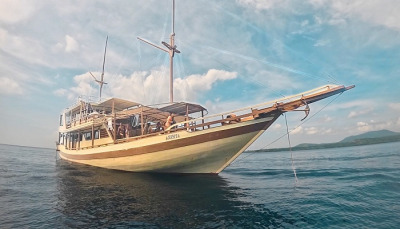
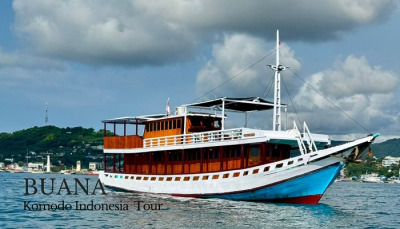
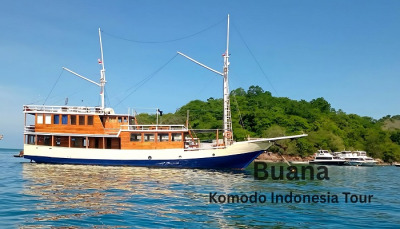
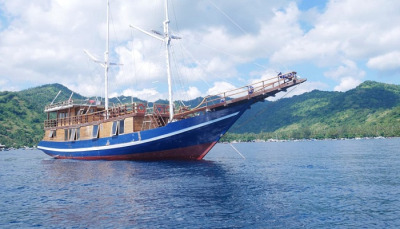
A phinisi is a traditional Indonesian sailing vessel associated with the maritime heritage of South Sulawesi, particularly the Bugis and Makassar seafaring communities.
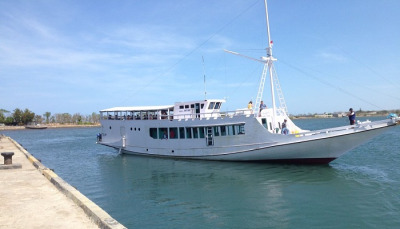
Modern tourist phinisi vessels combine traditional wooden boat-building influences with contemporary accommodation and navigation equipment. Depending on the vessel, facilities may include private cabins, shared rooms, air conditioning, bathrooms, dining areas, sun decks, and snorkeling equipment.
Not every boat advertised for a Lombok to Komodo cruise is a luxury phinisi. Some are simpler wooden liveaboard vessels designed primarily for budget-conscious travelers. Therefore, understanding the actual vessel and its facilities is more important than relying only on the category name.
Standard boats are suitable for backpackers, solo travelers, students, and visitors who prioritize the sailing experience over premium accommodation.
Facilities vary between vessels, but standard options may include shared sleeping areas, mattresses, basic bathrooms, simple dining facilities, and common deck spaces.
The main advantage is affordability. Travelers can enjoy the same general route and meet other adventure seekers without paying for luxury accommodation.
Superior boats generally offer a more comfortable onboard environment than basic standard vessels. Depending on the boat, facilities may include improved sleeping arrangements, more organized cabin spaces, better communal facilities, and additional deck areas.
This category can be a good choice for travelers who want a balance between budget and comfort.
Deluxe boats are designed for travelers who prefer a more comfortable sailing experience. Depending on the vessel, guests may enjoy air-conditioned cabins, upgraded bedding, private or shared bathrooms, and more spacious common areas.
For couples, friends, and small families, deluxe accommodation can make a considerable difference during a four-day sailing journey.
Luxury phinisi vessels offer a more exclusive sailing experience. Depending on the individual boat, facilities may include private en-suite cabins, upgraded interiors, spacious sun decks, premium dining arrangements, and additional onboard services.
Some premium vessels also provide facilities such as Wi-Fi, paddleboards, kayaks, entertainment systems, and dedicated guest-service teams.
Luxury is not simply about appearance. Travelers should also consider cabin ventilation, bathroom arrangements, passenger capacity, crew experience, safety equipment, and the quality of onboard services.
A typical Lombok to Komodo boat trip takes four days and three nights. The route generally starts in Lombok, continues through Sumbawa, explores selected destinations around Komodo National Park, and finishes in Labuan Bajo, Flores.
The following itinerary provides a practical example of how the journey can be organized. Actual destinations, departure times, overnight anchorages, and activities can change according to the vessel’s schedule and sea conditions.
Your adventure begins with a meeting point in the Senggigi, Mataram, or another designated area in Lombok, depending on the package you have booked.
After the pickup or meeting process, guests travel to Kayangan Harbour in East Lombok, where the boat and crew are prepared for departure.
Upon boarding, the crew introduces the vessel, explains the onboard facilities, and provides basic safety instructions. Guests can settle into their assigned cabins or sleeping areas before the sailing journey begins.
As the boat leaves Lombok, the landscape gradually changes from familiar coastal scenery to the open waters surrounding Sumbawa.
One of the possible first destinations is Kenawa Island, where guests can enjoy a relaxing beach visit and a short walk toward its scenic hilltop viewpoint.
As the afternoon progresses, the surrounding ocean becomes an ideal setting for sunset photography. After returning to the boat, guests enjoy dinner and spend their first night aboard the vessel.
Day 1 highlights:
The second day begins early in the morning as the boat approaches Saleh Bay, Sumbawa. This is one of the most anticipated experiences for travelers who choose the extended Lombok to Komodo sailing route.
After breakfast or the crew’s designated preparation time, guests receive instructions about the whale shark snorkeling activity.
If whale sharks are present and conditions are suitable, visitors may have the opportunity to observe these gentle giants in the water.
Once the activity is completed, guests return to the boat for refreshments and the continuation of the sailing journey.
Depending on the selected itinerary, the boat may continue toward other destinations in Sumbawa, such as Satonda Island or Moyo Island. These additional destinations should be confirmed before departure because they are not guaranteed on every 4D3N route.
At the end of the day, guests enjoy dinner, relax on the deck, and prepare for the next stage of the adventure.
Day 2 highlights:
Day three is dedicated to some of the most famous attractions in Komodo National Park. For many travelers, this is the highlight of the entire journey.
The day may begin with an early-morning visit to Padar Island. After reaching the landing point, guests follow the designated trekking path toward the panoramic viewpoint.
From the top, the island’s dramatic hills and three distinctive bays create one of the most recognizable landscapes in Indonesia.
After returning to the boat, the journey continues toward Komodo Island. Here, guests participate in a guided nature walk to learn about the Komodo dragon and its natural habitat.
Following the trekking experience, the boat may continue to Pink Beach for swimming, relaxation, and snorkeling.
Later, the itinerary may include Manta Point and Taka Makassar, depending on sea conditions and the available time. These locations provide opportunities to observe manta rays and enjoy the beautiful marine environment of Komodo National Park.
Day 3 highlights:
The final day offers another opportunity to appreciate the beauty of Flores and the surrounding islands.
Depending on the vessel’s itinerary, guests may visit Manjarite Island, a popular snorkeling destination known for its clear water and coral reef environment.
The boat may also stop at Kelor Island, where visitors can enjoy a short beach visit or a hike toward a scenic viewpoint.
After the final activities, guests return to the vessel, collect their belongings, and prepare for arrival in Labuan Bajo.
The sailing journey officially concludes at Labuan Bajo Harbour, Flores, generally in the afternoon according to the vessel’s arrival schedule.
From here, travelers can continue their journey to hotels, the airport, local restaurants, or other destinations in Flores.
Day 4 highlights:
Important: The sequence of destinations may change. A responsible captain must prioritize navigation safety, sea conditions, tides, and official park restrictions over maintaining a fixed sightseeing timetable.
Understanding the geographical route is important before booking a four-day sailing expedition. The journey covers a considerable distance across the Indonesian archipelago, passing between Lombok, Sumbawa, and Flores.
The general route can be understood through the following sequence:
Explore the general geographical route using Google Maps – Kayangan Harbour to Labuan Bajo.
For actual boat navigation, do not use a standard road map as a substitute for marine charts or the captain’s navigation system. Google Maps is useful for understanding geographical locations and planning land transfers, but it does not provide authoritative marine navigation guidance.
Some travelers assume that every 4D3N Lombok to Komodo cruise follows exactly the same itinerary. In reality, vessels may use different routes, visit different islands, and operate different departure schedules.
For example, a vessel may prioritize whale shark snorkeling in Saleh Bay, while another may include additional island exploration. Some boats may spend more time around Komodo National Park, depending on their sailing speed and departure arrangements.
Before paying a deposit, request a route confirmation containing:
Price is one of the most important considerations when choosing a Lombok to Komodo boat trip. The total cost depends on the vessel, cabin category, departure date, passenger capacity, onboard facilities, and included services.
For a four-day, three-night sailing experience, travelers can generally choose between standard, superior, deluxe, and luxury accommodation categories.
Based on publicly advertised 2026 route listings, the following ranges provide an indicative planning guide. These are market reference prices rather than a confirmed Komodo Tour Indonesia quotation.
These ranges are indicative, and actual prices may be lower or higher. Some public listings include selected meals, snorkeling equipment, or park fees, while others charge separately. Compare the actual inclusions rather than comparing the headline price alone.
For additional price comparisons, travelers can review Komodo Indonesia’s tour published price information and compare available vessel categories before requesting a current quotation.
There are several factors that influence the cost of a 4D3N Komodo cruise.
When comparing two boat packages, use the same checklist for both operators. This prevents misunderstandings and makes it easier to identify the best overall value.
A lower advertised price does not always represent the best deal. A slightly more expensive boat may offer better sleeping arrangements, more bathrooms, lower passenger density, or clearer service inclusions.
Every operator has different package conditions, but a typical shared 4D3N Lombok to Komodo boat trip may include the following services.
Always request a complete written inclusion and exclusion list. In particular, ask the operator to explain which official conservation fees, local activity fees, and boat-related charges are covered by the package.
The right boat can significantly influence your overall experience. Since you will spend three nights onboard, it is worth taking time to compare sleeping arrangements, facilities, safety standards, and passenger capacity.
Standard boats are often the most practical choice for backpackers and solo travelers who want to explore Komodo on a limited budget.
The social atmosphere can be one of the biggest advantages. Guests share common areas, enjoy meals together, and meet people from different countries.
However, before booking a standard boat, ask about sleeping arrangements, bathroom facilities, ventilation, and the maximum number of guests.
Couples may prefer a superior or deluxe vessel with a private cabin. Having a dedicated sleeping space provides greater privacy and makes the three-night journey more comfortable.
For honeymooners and couples celebrating a special occasion, a luxury phinisi may be worth considering if the budget allows.
Families should pay particular attention to safety, cabin arrangements, bathroom facilities, and the age requirements for marine activities.
Ask whether children can be accommodated in the same cabin, whether life jackets are available in appropriate sizes, and whether the itinerary can accommodate the family’s physical abilities.
Parents should also discuss sea conditions, snorkeling supervision, and the suitability of the vessel for younger children before making a booking.
Luxury travelers should compare more than interior design and cabin photographs. Consider passenger capacity, crew-to-guest ratio, dining arrangements, bathroom quality, air conditioning, and the vessel’s maintenance history.
A smaller boat with fewer guests may provide a more exclusive atmosphere than a larger vessel with impressive promotional photographs.
Indonesia has a tropical climate, and weather conditions can influence the experience of a multi-day sailing expedition. The best travel period depends on your preferred activities, sea conditions, rainfall, and the operating schedule of the boat.
April to June is generally considered an attractive period for exploring many destinations in the Lesser Sunda Islands. The transition toward drier weather can provide opportunities for island trekking, snorkeling, and coastal exploration.
The landscape may also remain relatively green following the rainy season, offering attractive conditions for photography.
July to September is generally within the dry season in the region. Many travelers choose this period for outdoor activities, including trekking, sightseeing, and marine excursions.
However, the dry season can also bring strong winds and challenging sea conditions in certain locations. A dry forecast does not automatically mean that every sailing route will be calm.
October and November are transitional months in many parts of Indonesia. Travelers may experience a mixture of sunny days, changing winds, and occasional rainfall.
This period can still offer excellent travel opportunities, but it is important to monitor the marine forecast before departure.
December to March generally brings wetter weather to much of the region. Rainfall, wind, and wave conditions may influence the sailing schedule and accessibility of selected destinations.
Travelers planning a cruise during these months should maintain flexible schedules and discuss weather-related cancellation and rescheduling arrangements with their operator.
Technology can make travel preparation more effective. Instead of relying entirely on a general weather application, check official marine forecasts and ask the boat operator for its latest navigation assessment.
BMKG provides marine weather information covering wave conditions and other maritime forecast products. Its official services are particularly useful when planning travel across exposed waters. Read the BMKG maritime weather service information for further details.
Preparing the correct equipment can make your four-day sailing experience considerably more comfortable. Space onboard may be limited, especially on shared boats, so practical packing is better than bringing unnecessary luggage.
Practical packing tip: Use one small day bag for activities and one waterproof dry bag for important belongings. Keep your passport, phone, wallet, and electronic equipment protected from splashes and unexpected rain.
A successful sailing trip depends on more than choosing an attractive itinerary. Small preparations can improve your comfort, reduce unexpected expenses, and help you enjoy the journey with greater confidence.
Avoid booking a flight that arrives only a few hours before your boat departure. Flight delays, traffic, luggage problems, and unexpected transportation changes can cause you to miss the scheduled sailing time.
Arriving one day early gives you time to rest, check your documents, purchase missing equipment, and confirm the meeting point.
Lombok has several ports and tourist transportation points. Your hotel may be in Senggigi, while your boat departs from Kayangan Harbour in East Lombok.
Ask the operator to provide the exact departure harbor, pickup time, meeting-point location, and estimated transfer duration.
Mobile coverage can be inconsistent during long-distance sailing. Download maps of Lombok, Sumbawa, and Labuan Bajo before departure.
Google Maps can help you navigate the land-based sections of your journey, while offline mapping applications can provide additional location references when internet access is unavailable.
Do not assume that your mobile data connection will work throughout the sailing journey. Some boats offer Wi-Fi or satellite internet, but availability, speed, and coverage vary.
Download important travel documents, entertainment, music, and offline maps before boarding. Inform family members that internet access may be intermittent.
Although digital payments are increasingly common in Indonesia, some remote destinations and small local businesses may not accept electronic payments.
Bring sufficient Indonesian rupiah for personal expenses, tips, optional activities, and unexpected transportation costs.
Three nights onboard can feel very different depending on your sleeping arrangements. If you are sensitive to heat, noise, or motion, ask detailed questions about cabin ventilation, air conditioning, location, and bathroom access.
Some travelers experience motion sickness during long-distance sailing. If you are prone to seasickness, discuss suitable preventive options with a qualified healthcare professional before departure.
Additional practical measures include getting adequate sleep, staying hydrated, eating regularly, and spending time in well-ventilated areas when possible.
Komodo National Park is a protected natural environment. Follow the instructions of your guide, avoid disturbing wildlife, and never leave rubbish behind.
Responsible tourism helps protect the destinations that make this journey so special.
Modern technology can make a remote sailing adventure easier to organize. Although the experience is about disconnecting from everyday routines and enjoying nature, several digital tools can improve preparation, communication, and travel safety.
Google Maps is useful for checking the distance between your hotel, airport, meeting point, and departure harbor. Save important locations before leaving your accommodation.
It is especially useful when organizing transfers between Senggigi, Mataram, and Kayangan Harbour.
Remember that road navigation applications are not substitutes for official marine navigation systems.
Windy provides visual forecasts that can help travelers understand wind direction, rainfall, and changing weather patterns.
It is useful for following general weather developments, but the captain and authorized marine weather information should determine whether sailing and snorkeling activities are safe.
For travel across Indonesian waters, BMKG is an important source of official meteorological information.
Check marine forecasts and high-wave warnings before departure, particularly when traveling during periods of changing weather.
Google Translate can help international travelers communicate with local drivers, restaurants, and service providers. Download the Indonesian language package for offline use.
Although English is commonly used in tourism services in Labuan Bajo and Lombok, a few Indonesian expressions can make interactions more enjoyable.
Use a travel organizer or digital notes application to store your booking information, itinerary, hotel details, and emergency contacts.
Keep an offline copy of important documents because mobile internet may not always be available.
For travelers who enjoy sharing their adventures, smartphone photography applications can help organize images, edit videos, and create travel memories.
Before sailing, make sure your devices are fully charged and protected against water. A power bank and waterproof dry bag are particularly useful on multi-day boat trips.
Safety is one of the most important considerations when booking a multi-day sailing adventure. A four-day boat trip involves open-water navigation, changing weather conditions, island trekking, snorkeling, and wildlife observation.
A reputable operator should be transparent about its vessel, crew, safety equipment, operating procedures, and itinerary adjustments.
Before departure, travelers should ask whether the vessel is equipped with appropriate safety equipment and whether the crew understands the emergency procedures.
The specific equipment required depends on the vessel, its operating classification, and applicable maritime regulations. Ask the operator to explain how safety procedures are implemented rather than relying on promotional photographs.
Before confirming your reservation, check the following information:
A professional operator should be willing to answer these questions before taking your booking deposit.
The natural beauty of Komodo National Park is its greatest attraction. However, the increasing popularity of the destination makes responsible tourism more important than ever.
Visitors should understand that Komodo National Park is not simply a collection of tourist beaches. It is a protected ecosystem that supports unique wildlife and marine biodiversity.
Komodo dragons are wild animals that require suitable natural habitats. Human activities should never interfere with their normal behavior.
Follow ranger instructions, maintain a safe distance, and avoid feeding or disturbing the animals.
Coral reefs provide important habitats for numerous marine species. They are sensitive to physical damage, pollution, and irresponsible tourism activities.
Snorkel responsibly, avoid touching coral, and make sure that rubbish is returned to the boat.
Responsible travel also means recognizing the importance of local communities. Choosing legitimate local tourism services, respecting local customs, and purchasing locally produced goods can contribute to the regional economy.
Travelers can also support conservation by choosing operators that demonstrate responsible environmental practices.
Small changes can reduce the amount of waste produced during a four-day cruise.
Both routes offer access to the extraordinary attractions of Komodo National Park, but they provide different travel experiences.
The Lombok to Komodo sailing route is ideal for travelers who want a longer adventure connecting several islands and marine destinations. The Labuan Bajo route is more suitable for visitors who want to focus primarily on the national park.
The Lombok departure route is generally a one-way sailing journey toward Labuan Bajo. It offers the possibility of exploring Sumbawa and experiencing the whale shark destination in Saleh Bay before reaching Komodo National Park.
Its main advantages include:
A 3D2N Komodo cruise is a popular choice for travelers who want to explore the national park without spending several days crossing from Lombok.
These tours generally focus on the iconic islands and marine destinations around Labuan Bajo.
Common highlights may include:
The exact itinerary depends on the boat and departure schedule.
For travelers with limited time, a 2D1N sailing experience from Labuan Bajo can provide an introduction to the national park.
This option is suitable for short holidays, but the number of destinations is generally more limited than on a three-day cruise.
A one-day tour from Labuan Bajo is a practical choice for visitors who prefer to sleep in a hotel and explore the main attractions by speedboat.
Although this option saves time, it does not offer the same extended liveaboard experience as a 4D3N Lombok to Komodo cruise.
The extended sailing journey is suitable for several types of travelers, provided they are comfortable spending multiple days on a boat.
Travelers visiting Indonesia from Europe, the United States, Australia, and other international destinations may find this route an excellent way to discover several islands during one holiday.
The combination of nature, marine wildlife, trekking, and traditional sailing offers a diverse travel experience.
Shared boat departures can be an attractive choice for backpackers who want to meet other travelers and explore Indonesia without arranging a private charter.
Before booking, check the sleeping arrangements and the number of passengers onboard.
Couples who want a memorable tropical adventure may prefer a deluxe or luxury phinisi with a private cabin.
The opportunity to enjoy sunsets, beautiful islands, and marine wildlife together creates a distinctive alternative to a conventional resort holiday.
The route provides a variety of photographic environments, from tropical beaches and savanna hills to whale sharks, manta rays, and dramatic island landscapes.
Travelers should bring suitable camera protection and check whether drone photography is permitted at the destinations they intend to visit.
Visitors interested in marine biodiversity and wildlife conservation can enjoy learning about whale sharks, manta rays, coral reefs, and Komodo dragons during the journey.
They should remember that wildlife encounters are naturally unpredictable and should never be treated as guaranteed performances.
The standard journey takes four days and three nights. The boat generally departs from a designated harbor in Lombok and arrives at Labuan Bajo Harbour in Flores on the fourth day.
Departure arrangements depend on the operator. Many packages include a meeting point in Senggigi or Mataram, followed by transportation to Kayangan Harbour in East Lombok.
The Lombok to Komodo sailing journey generally finishes at Labuan Bajo Harbour, Flores, where guests can continue to their hotels or the airport.
The itinerary may include Saleh Bay, Sumbawa, where whale shark encounters are possible. However, sightings are not guaranteed because whale sharks are wild animals and their presence depends on natural conditions.
This depends on the operator. Ask whether the whale shark activity, local arrangements, and any applicable charges are included or payable separately.
No. Moyo Island is an optional destination on some extended itineraries. Its inclusion depends on the boat’s route, sailing time, and weather conditions.
Some sailing packages include Satonda Island, while others prioritize Saleh Bay and Komodo National Park. Always check the confirmed itinerary before booking.
Komodo Island and Rinca Island are natural habitats of Komodo dragons. Visitors have opportunities to observe them with authorized park rangers, but wildlife sightings cannot be guaranteed.
The itinerary may include Manta Point, a well-known location for manta ray encounters. Sightings depend on natural conditions, currents, and wildlife activity.
Non-swimmers may be able to join the sailing trip, but snorkeling activities require additional precautions. Inform the operator before booking, request an appropriate life jacket, and never enter the water without guide approval.
Suitability depends on the child’s age, the vessel’s facilities, and the family’s ability to manage several days at sea. Parents should confirm age requirements, safety arrangements, and cabin availability before booking.
Yes. Depending on availability, travelers may arrange a private charter for couples, families, or groups. A private charter generally offers more flexibility in cabin arrangements, onboard services, and itinerary planning, subject to safety and navigation requirements.
Many packages include meals throughout the journey. The exact number, menu, and dietary options vary by vessel. Ask about vegetarian, vegan, and other dietary requirements before departure.
Wi-Fi availability depends on the vessel. Some premium boats provide satellite internet, while basic boats may have limited or no internet access. Travelers should prepare for periods without mobile connectivity.
Some packages provide masks, snorkels, and fins. However, equipment quality and availability vary. Confirm the inclusions or bring your personal equipment if you prefer a particular fit.
The captain and operator may modify the itinerary, delay departure, or cancel activities when conditions are unsafe. Ask about the operator’s weather-related cancellation and rescheduling policy before making payment.
Not necessarily. Some packages include park charges, while others require guests to pay separately. Ask for an itemized explanation of applicable official fees and additional local charges.
Do not assume drone use is automatically permitted. Special permissions or restrictions may apply in protected areas. Confirm the current regulations with park authorities and your tour operator before bringing or flying a drone.
Bring comfortable trekking shoes, drinking water, sun protection, a hat, and a camera. Follow the guide’s instructions and remain on the designated trail.
Travel insurance is strongly recommended for international visitors. Choose coverage appropriate for sailing, snorkeling, medical emergencies, and travel disruptions. Read the policy carefully to understand any exclusions for marine activities.
Yes. Labuan Bajo offers access to hotels, restaurants, local tours, and transportation to other destinations in Flores. Travelers can also arrange onward flights according to their travel plans.
Booking the right boat trip should be a straightforward process. However, because the journey involves several destinations, a multi-day sailing schedule, and different boat categories, it is important to confirm the details before paying.
Check the available sailing calendar and choose a departure date that fits your Lombok travel arrangements.
Remember that departure schedules can differ between standard, deluxe, and luxury vessels.
Decide whether you prefer a standard, superior, deluxe, or luxury boat. Consider your budget, cabin requirements, and preferred onboard facilities.
Check whether your selected cabin is private or shared, whether air conditioning is available, and whether the bathroom is ensuite or shared.
Ask for the confirmed sailing route, including Saleh Bay, whale shark activities, Komodo National Park, and any additional destinations.
Check meals, transfers, snorkeling equipment, park charges, and any other additional services.
Request payment instructions, cancellation terms, rescheduling policies, and written confirmation of your reservation.
Arrive in Lombok early, prepare your travel documents, pack appropriately, and confirm your pickup or meeting point with the operator.
Choosing a local operator can make a significant difference when organizing a multi-day sailing adventure across Lombok, Sumbawa, and Flores. Local knowledge, clear communication, and reliable coordination are important when several destinations and transportation arrangements are involved.
Komodo Tour Indonesia provides travelers with access to different Komodo sailing experiences, including standard, superior, deluxe, and luxury boat options, subject to departure availability.
Every traveler has different expectations. Some prioritize affordable accommodation and social interaction, while others prefer private cabins and upgraded onboard facilities.
Offering different boat categories allows travelers to compare their options before selecting a suitable package.
Planning a Lombok to Komodo sailing journey involves more than reserving a boat. Travelers also need information about departure harbors, meeting points, transportation, sailing schedules, and arrival arrangements in Labuan Bajo.
Working with a local tourism operator can help simplify these arrangements and provide more direct communication about the journey.
Travelers deserve accurate information before committing to a multi-day trip. A professional booking process should clearly explain the boat category, departure date, cabin arrangements, itinerary, package inclusions, and additional expenses.
The Lombok to Komodo route provides an opportunity to explore destinations beyond the national park. The possibility of visiting Kenawa Island, Saleh Bay, and selected Sumbawa destinations adds variety to the sailing experience.
Travelers can enjoy a journey that combines marine wildlife, island landscapes, and the famous attractions of Komodo National Park.
Arriving in Labuan Bajo does not have to be the end of your Indonesian adventure. Flores and the surrounding islands offer additional destinations for travelers who have more time to explore.
If you want to spend additional time around Komodo National Park, consider a separate 3D2N liveaboard experience from Labuan Bajo. Depending on the route, this can include additional snorkeling locations, island trekking, and marine exploration.
A 2D1N cruise is another option for travelers who want to explore selected attractions without committing to a longer sailing holiday.
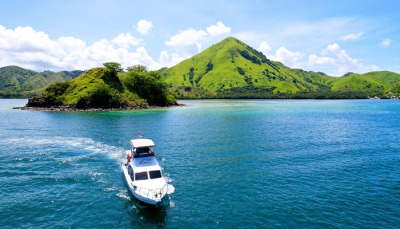
For visitors with limited time, a private or shared speedboat tour can provide a convenient way to visit selected islands around Labuan Bajo.
Travelers who want to explore beyond the coast can consider an overland journey through Flores. Destinations such as traditional villages, mountain landscapes, and cultural attractions offer a different perspective on eastern Indonesia.
Before or after the sailing journey, consider extending your holiday in Lombok. The island offers beautiful beaches, waterfalls, traditional villages, and Mount Rinjani trekking experiences.
The nearby Gili Islands are also popular for snorkeling, diving, and relaxed tropical holidays.
The 4D3N Komodo tour from Lombok is an excellent option for travelers who want more than a conventional island holiday. It combines the experience of traditional Indonesian sailing with the opportunity to explore the waters between Lombok, Sumbawa, and Flores.
From the peaceful beaches of Kenawa Island to the possibility of swimming with whale sharks in Saleh Bay, the journey offers a diverse range of experiences before reaching the extraordinary landscapes of Komodo National Park.
Padar Island provides spectacular panoramic views, Pink Beach introduces travelers to a rare coastal landscape, and Komodo Island offers an opportunity to observe one of the world’s most remarkable reptiles. Manta Point and Taka Makassar add further opportunities to appreciate the region’s marine environment.
Choosing the right boat is equally important. Whether you prefer a budget-friendly standard vessel, a comfortable deluxe phinisi, or a premium luxury sailing experience, take time to compare the facilities, safety arrangements, itinerary, and package inclusions.
Most importantly, remember that the best sailing experience is not simply about visiting the greatest number of destinations. It is about enjoying the journey responsibly, respecting wildlife, appreciating local communities, and allowing yourself to experience the extraordinary natural beauty of Indonesia.
So, if you could choose only one highlight of this adventure, would it be swimming alongside whale sharks in Saleh Bay, watching the sunrise from Padar Island, or seeing a Komodo dragon in its natural habitat?
We would love to hear your thoughts. Share your questions, travel experiences, or favorite destinations in the comments below. Your feedback can help other travelers plan a better and more responsible Komodo sailing adventure.
Are you ready to discover the extraordinary islands between Lombok and Komodo? Join Komodo Tour Indonesia for a memorable four-day, three-night sailing adventure connecting Lombok, Sumbawa, and Labuan Bajo.
Choose from available standard, superior, deluxe, and luxury phinisi boats, and find the sailing experience that matches your travel style and budget.
Contact our local team to check departure dates, available cabins, current prices, and the confirmed itinerary. We are ready to help you organize your journey from Lombok to Labuan Bajo.
Komodo Tour Indonesia – Discover the Islands, Experience the Adventure, and Explore the Beauty of Indonesia.
Website: https://komodoindonesiatour.com/
Explore more: Komodo Tour Packages and Boat Prices
Komodo Travel Note About Indonesia’s Dragon Island You have seen the photos. The jagged green ridges of Padar at sunrise, the pink sand, the massive prehistoric lizard with a forked tongue tasting the air. But a Komodo tour note written by someone who actually went will tell you something the brochures will not: this trip […]
expand_circle_right Selengkapnya
Lombok to Labuan Bajo: Sailing from Mountain to Dragon’s Sea A Voyage Through Indonesia’s Living Paradise The ocean between Lombok and Labuan Bajo is more than just water, it’s a passage between worlds.From the misty peaks of Mount Rinjani to the fiery sunsets of Komodo National Park, every wave carries a whisper of adventure, every […]
expand_circle_right Selengkapnya
KENAWA ISLAND, LOMBOK Kenawa Island is a popular marine tourism destination near West Sumbawa, West Nusa Tenggara (NTB) — not directly on the Lombok mainland, but usually included in Lombok tour packages due to its easy access from there. Here’s a summary Location Main Attractions How to Get to Kenawa from Lombok There are usually […]
expand_circle_right Selengkapnya
Where do Komodo dragons live in Indonesia? A Komodo Indonesia Tour is more than an ordinary island holiday. It is an opportunity to discover one of the world’s most remarkable reptiles, explore spectacular tropical landscapes, and experience the extraordinary marine biodiversity of eastern Indonesia. Located in East Nusa Tenggara, Komodo National Park attracts travelers with […]
expand_circle_right Selengkapnya
Kayangan Harbor: The Gateway to Adventure from Lombok to Labuan Bajo Kayangan Harbor, located on the eastern coast of Lombok Island, is one of the busiest and most important ports in West Nusa Tenggara, Indonesia. Serving as the main connection between Lombok and Sumbawa, this harbor is also the starting point for many adventure seekers […]
expand_circle_right Selengkapnya
By Buana Komodo Indonesia Tour – komodoindonesiatour.com Planning to visit Komodo Island in 2026? You’re about to discover one of the most spectacular destinations in Southeast Asia. This comprehensive Komodo National Park Guide covers everything you need to know before traveling to Komodo Island Indonesia, from the best time to visit and top attractions to […]
expand_circle_right Selengkapnya
We Accept Payment:


Saat ini belum ada komentar