

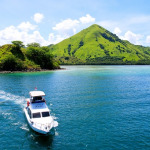
A Labuan Bajo one-day trip by speed boat is the travel world’s equivalent of a “fast and furious” cinematic experience, condensed into a single, breathtaking sun-drenched day. While traditional Phinisi schooners offer a languid, multi-day drift through the Flores Sea, the speed boat is the surgical tool of the modern explorer—built for efficiency, high-octane transitions, and hitting every iconic landmark before the sun dips below the horizon. In 2026, time is the ultimate luxury, and for many travelers, spending three days on a boat isn’t an option. This is where the specialized day-trip vessel comes in, capable of covering over 100 kilometers of maritime territory to bring you face-to-face with prehistoric dragons, neon-pink sands, and manta rays as large as small cars. It is an intense, high-reward itinerary that requires precise timing, a bit of physical stamina, and a deep understanding of the archipelago’s geography. If you are ready to trade a slow pace for a “greatest hits” tour of the UNESCO-protected Komodo National Park, this is how you master the art of the 10-island dash without losing your mind—or your camera battery.
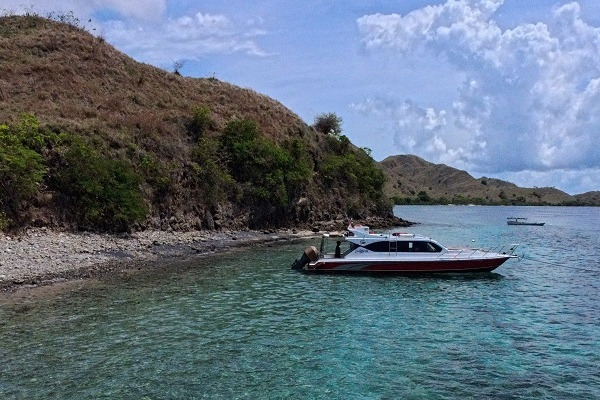
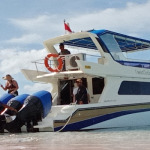
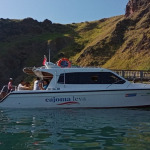
The geography of Komodo National Park is a complex labyrinth of volcanic peaks and shifting currents. A traditional wooden boat travels at about 5 to 7 knots, which barely covers two islands in a single afternoon. To execute a Labuan Bajo one-day trip by speed boat that includes ten stops, you need a vessel with triple 250hp or 300hp outboard engines capable of reaching 25 to 30 knots. This technological advantage buys you the most precious commodity: time at the destination. Instead of spending four hours transiting between Labuan Bajo and Padar Island, you arrive in just 60 to 75 minutes. This means you aren’t just seeing the islands from a distance; you are actually on the ground, trekking the ridges and snorkeling the reefs while the “slow boats” are still midway through their crossing.
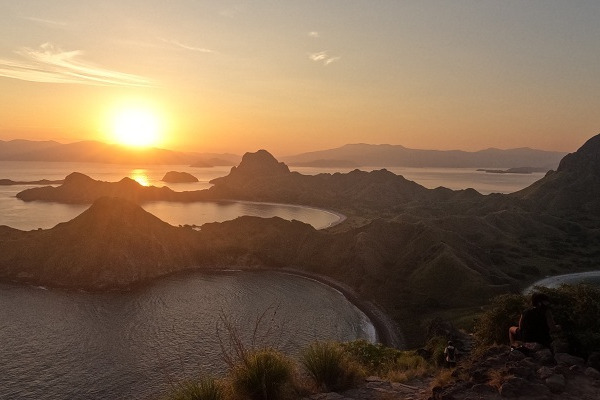
Your Labuan Bajo one-day trip by speed boat officially kicks off with the ascent of Padar Island. This is the “hero shot” of Indonesia. The hike consists of approximately 800 stone steps. While it sounds daunting, the reward is a panoramic view of three distinct colored beaches: white, black, and pink. Have you ever seen three different geological worlds collide in a single frame?
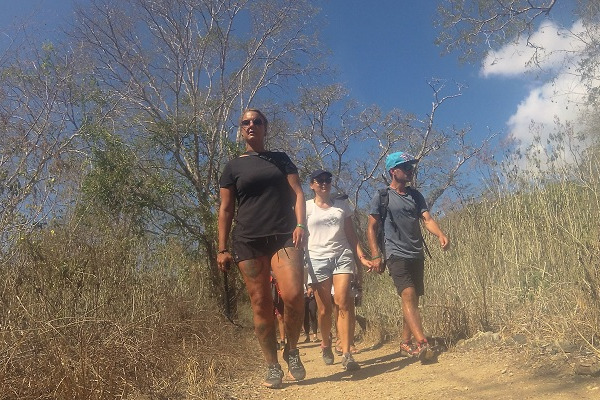
The heat at Padar rises exponentially after 8:00 AM. A practical method used by seasoned guides is the “20-10” rule: 20 steps of climbing followed by 10 seconds of standing rest while looking at the horizon. This prevents your heart rate from spiking and keeps your legs fresh for the rest of the 10-island itinerary. Use the AllTrails app to track your ascent, but more importantly, keep your phone in “Airplane Mode” to save battery for the thousands of photos you are about to take.
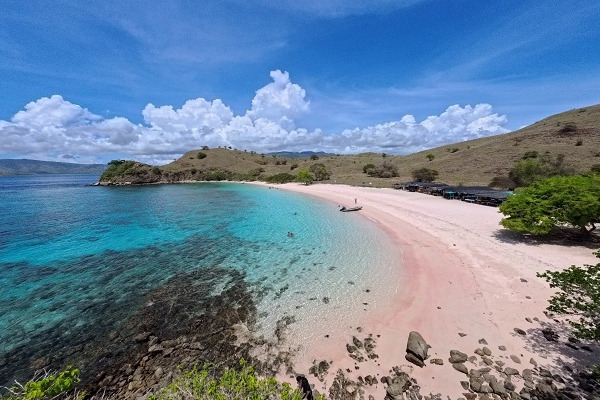
After descending Padar, the speed boat whisks you to Long Pink Beach. The pink hue is caused by crushed red organ pipe coral mixing with white sand. For the best photography, don’t shoot with the sun directly overhead. Instead, use a “Circular Polarizer” (CPL) filter on your smartphone or DSLR. This tool cuts the glare from the water and saturates the pink tones, making the sand look as vibrant in your photos as it does in real life. According to data from komodoexplore.com, the pink sand is a fragile biological product, and travelers are strictly prohibited from taking even a handful as a souvenir to ensure the park’s sustainability.
No Labuan Bajo one-day trip by speed boat is complete without the dragons. This itinerary focuses on Komodo Island, the largest habitat for the Varanus komodoensis. Because you are on a tight schedule, your guide will coordinate with the National Park rangers to take you on the “Short Trek” or “Medium Trek.” This ensures you see the dragons near the watering holes or the ranger stations without spending three hours in the bush.
Rangers use a forked wooden stick to guide the dragons. While it looks primitive, it is a highly effective tool for managing the dragon’s sensory perception. Always stay behind the ranger and avoid making sudden, jerky movements. The dragons have a keen sense of smell; if you have any open wounds, it is mandatory to inform the ranger beforehand, as the lizards can detect blood from miles away.
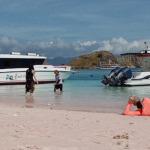
From the arid hills of the dragons, your Labuan Bajo one-day trip by speed boat transitions into the “Blue Zone.” Taka Makasar is a tiny, crescent-shaped sandbar surrounded by a shallow reef. It is so small that it often disappears during high tide. This is where your speed boat’s shallow draft is a massive advantage. You can literally hop off the boat onto the sandbar.
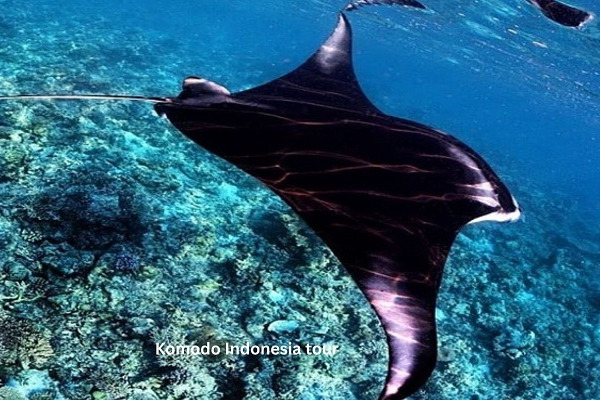
Manta Point is not a stationary snorkeling spot; it is a “drift snorkel.” The current here is powerful—it’s what brings the nutrient-rich water that the mantas love. Instead of fighting the current, the speed boat will drop you at “Point A” and pick you up at “Point B.” You simply float and let the ocean carry you over the giant rays. Have you ever felt the sheer weightlessness of drifting over a 4-meter wide creature as it “flies” through the water?
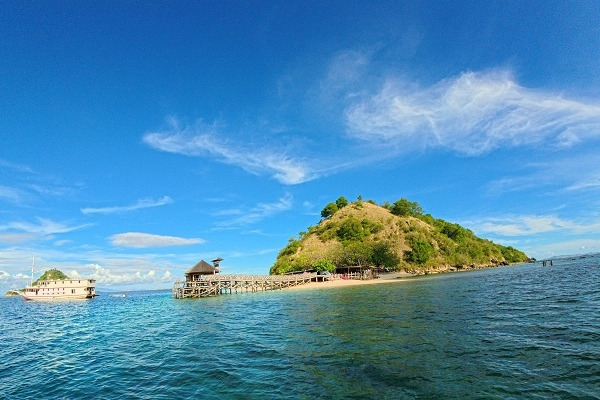
As the clock hits 2:00 PM, your Labuan Bajo one-day trip by speed boat moves to the “Garden Islands.” Kanawa Island is famous for its jetty, where you can see hundreds of tropical fish without even getting into the water. However, the real magic is the snorkeling reef just five meters from the shore. Use Google Lens after your swim to identify the specific starfish and clownfish you encountered; it’s a great way to add educational value to your trip.
Manjarite is a “hidden gem” often skipped by larger boats. It is a deep-water bay with virtually no current, making it look like a turquoise mirror. This is the best place for “Split Shots” (half underwater, half above) if you have a dome port for your GoPro. The coral here is exceptionally vertical, creating a dramatic backdrop for free-diving videos.
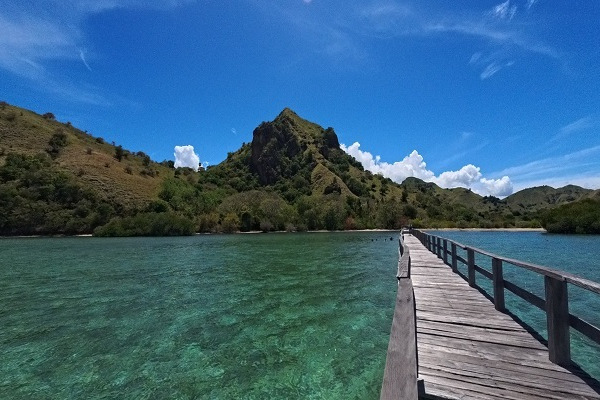
Kelor Island provides a final, steep hike that offers a different perspective of the park, looking back toward the mainland of Flores. It is a smaller, more intimate version of Padar. The practical technique here is the “controlled slide” on the way down—stay low and use your hands for balance, as the grass can be slippery. This is often the final physical challenge of the day before the boat heads to its sunset station.
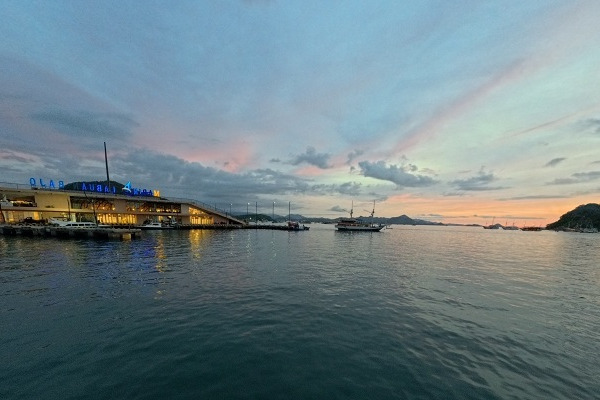
Your Labuan Bajo one-day trip by speed boat concludes at Kalong Island. “Kalong” means fruit bat in Indonesian, and the island is covered in dense mangroves. As the sun sets, tens of thousands of giant fruit bats emerge simultaneously to forage on the mainland. This is the “National Geographic” moment of the trip. The speed boat will cut its engines, allowing you to sit in the silence of the ocean while the sky turns black with wings.
Photography at Kalong Island is a challenge because it happens during “The Blue Hour.” To get a clear shot of the bats, don’t use a flash—it won’t reach them and will only reflect off the sea spray. Instead, increase your ISO to 1600 or 3200 and use a fast shutter speed (at least 1/500s) to freeze the motion of the wings against the fading light. According to reports from Komodo National Park (TNK), this migration is essential for the pollination of the Flores forests, and boat captains are encouraged to keep a respectful distance to avoid disorienting the colony.
Doing ten islands in one day is a logistical puzzle. In 2026, the smart traveler uses a “Tech Stack” to manage the intensity. You aren’t just a passenger; you are the mission controller of your own adventure. If you don’t use these tools, you are leaving your experience to chance.
The Labuan Bajo one-day trip by speed boat is physically demanding. To ensure you don’t crash by 4:00 PM, follow these “Pro” actionable tips that generic travel blogs usually ignore.
A Labuan Bajo one-day trip by speed boat is more expensive than a slow boat, but the value-per-hour is significantly higher. In 2026, many operators have moved toward “Green Speed” initiatives, using more efficient hull designs to reduce fuel consumption. By choosing an operator that uses 4-stroke engines rather than older, louder 2-stroke models, you are contributing to a quieter environment for the park’s marine life. Always check if your tour operator includes the National Park entrance fees in their quote, as these can fluctuate based on the day of the week and your nationality.
Concluding a Labuan Bajo one-day trip by speed boat feels like waking up from a vivid, hyper-colored dream. You have trekked the ridges of a prehistoric world, stood on a sandbar in the middle of the ocean, and looked into the eyes of a dragon—all before dinner. It is the ultimate testament to modern travel efficiency. While the Phinisi life has its charms, the speed boat is for the restless, the curious, and those who want to see the world at the speed of light. It challenges your stamina but rewards you with a life-changing perspective of Indonesia’s wild frontier. Would you rather spend three days seeing three islands, or ten hours seeing ten? The choice defines your travel style, but one thing is certain: the dragons are waiting. We would love to hear about your experience or help you fine-tune your itinerary—drop a comment below and let’s get your 2026 adventure moving!
Berikut ini adalah fasilitas yang Anda dapatkan pada saat menyewa unit ini:

We Accept Payment: